-
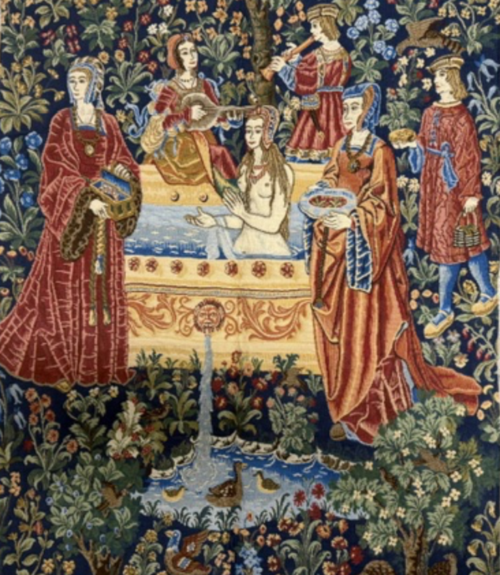 A woman bathing surrounded by attendants. Adapted from a 1500 original.
-
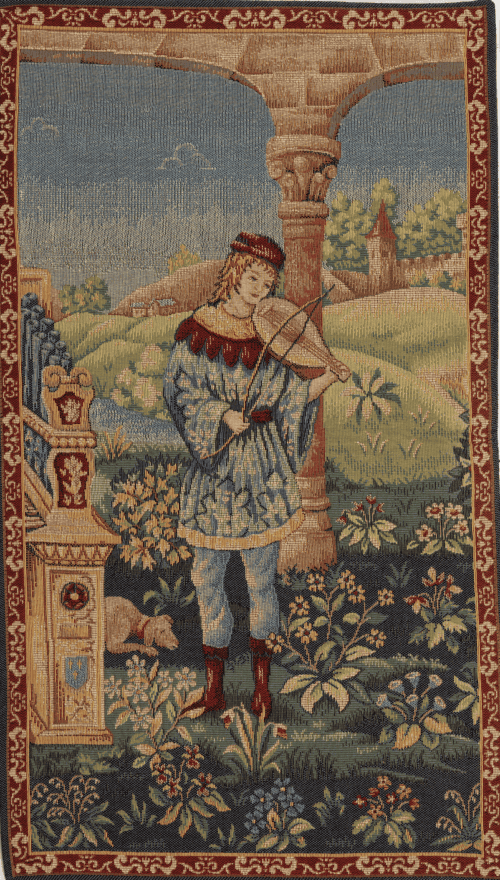 In a 16th century French court, on the shore of the Loire River, young people commonly played music. Here a young troubadour plays the violin. These striking mix of blue and green tones will surely enliven any setting.
-
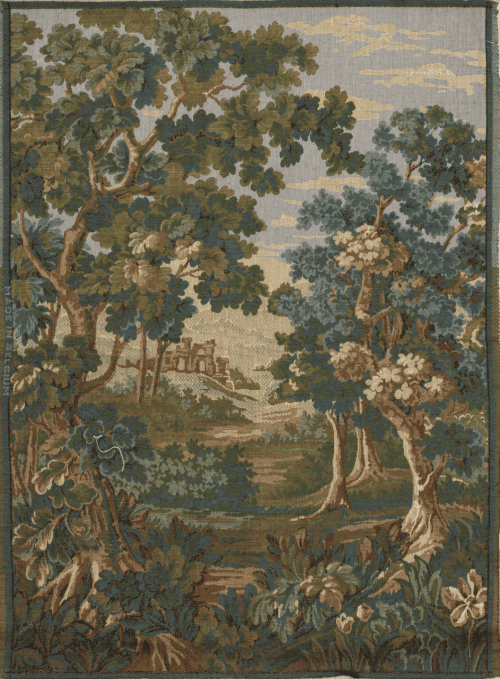 A view from the edge of a 17th century forest. In the distance are remains from ancient construction.
-
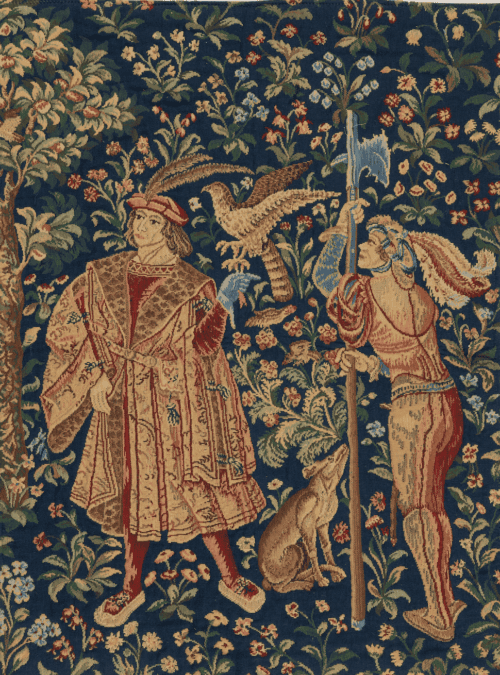 The Falconer is on exhibit in the Cluny Museum in Paris, is all that remains of a much larger 15th Century original that was part of a series of tapestries known as "Scenes of Seignioral (lordy) Life." Its realistically drawn figures have been lifted out of context and silhouetted against a mille fleurs background.
-
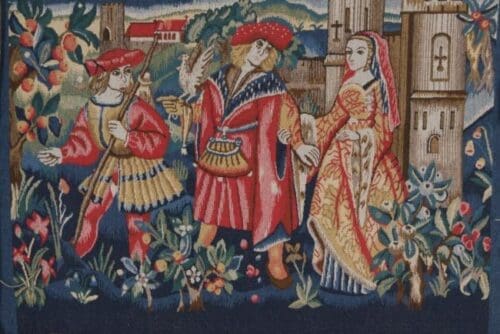
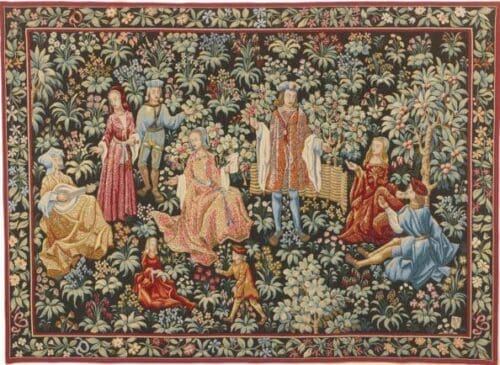 Against a rich "Mille-Fleurs" background, elegantly dressed characters are playing games, reading, or playing music. This graceful and poetic scene, set in the 15th century, reveals "a way" of life" for the nobility. The original is in the Cluny Museum, in Paris.
-
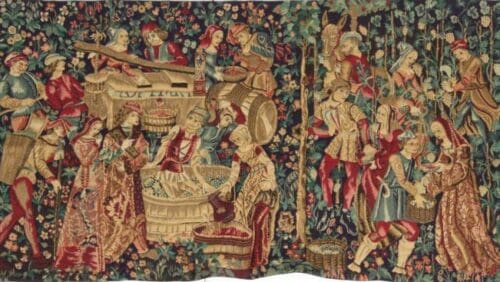
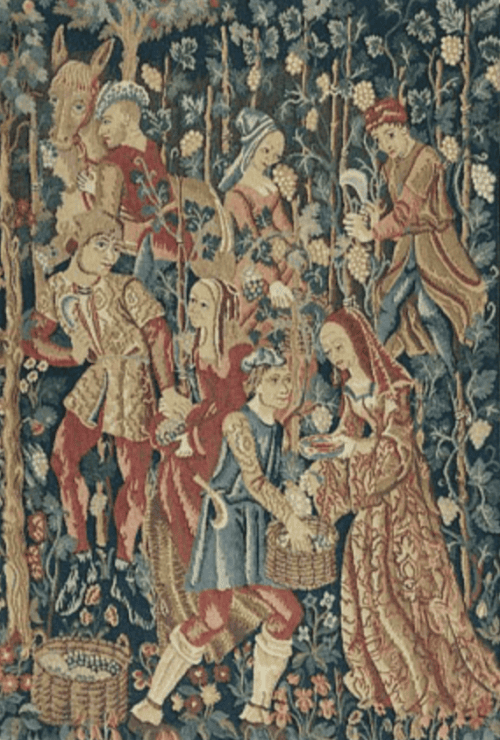 Adapted from the 14th Century original in the Cluny Museum, Paris. All the steps in wine making are shown from harvesting to pressing to tasting. The two panels shown are also available combines as a single large tapestry. The deep relief texture gives the pieces the same appealing quality as the original.
-
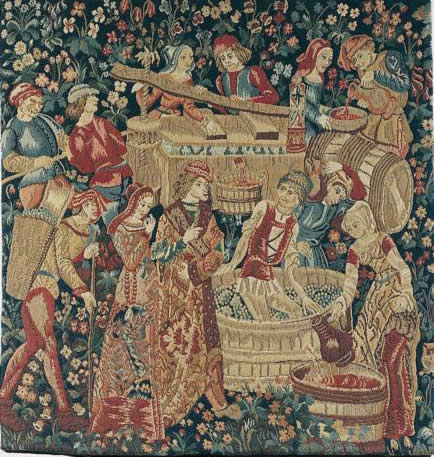 Adapted from the 14th Century original in the Cluny Museum, Paris. All the steps in wine making are shown from harvesting to pressing to tasting. The two panels shown are also available combined as a single large tapestry. The deep relief texture gives the pieces the same appealing quality as the original.
-
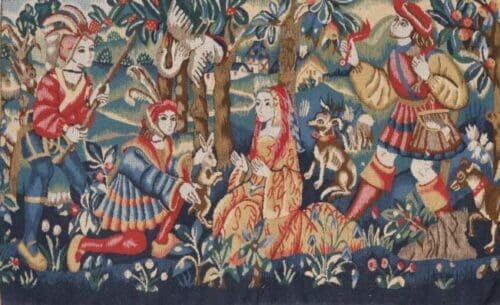
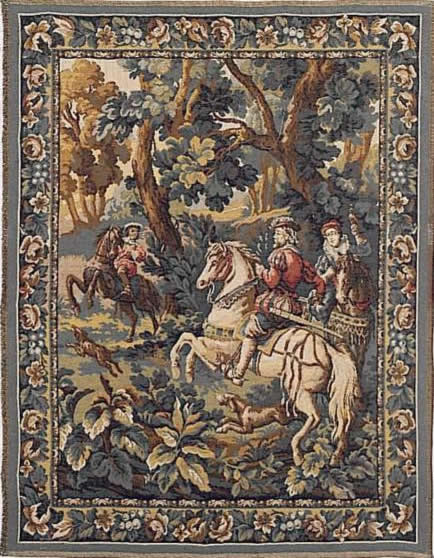 The second tapestry of the set of "Maximilian's Hunting Parties." This action takes place in a lush green forest where subject was of great decorative value in the 16th and 17th centuries. The rider on the left holds a falcon while a kettleman holds the leashes of three dogs.
-
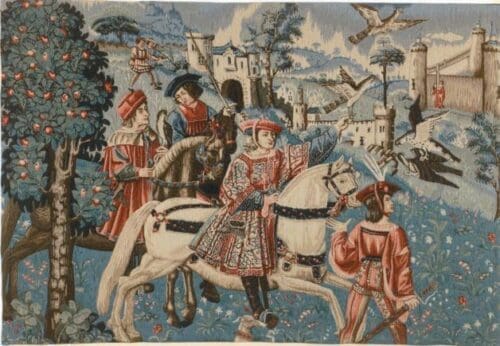 Woven in Brussels at the beginning of the 16th century, the tapestry shows one of the nobilty's favorite passtimes "Hawking". This adaptation is unusual and striking for its various shades of blue. The original is on display in the Cluny Museum in Paris.
-
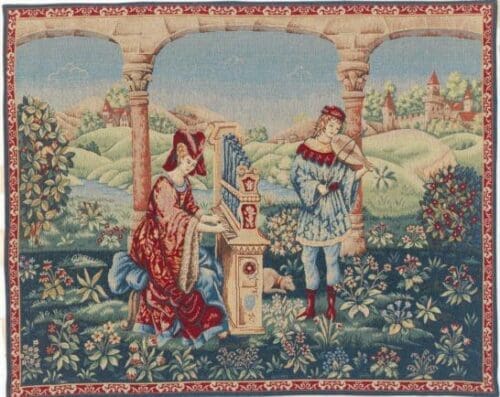
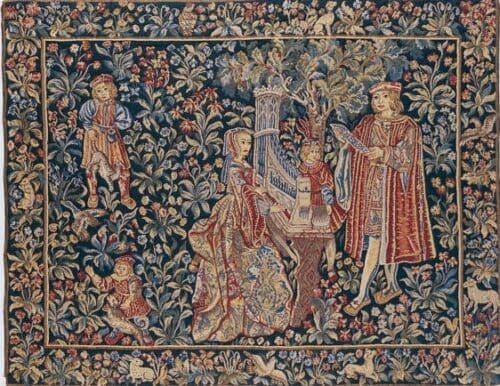 A young woman accompanies a nobleman's song on a portable organ while a boy turns the organ crank. The original tapestry, woven in the 16th Century, is now in the Chateau of Angers, France.
-
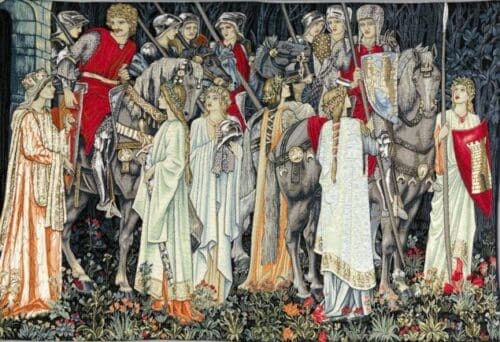 Women's Worth was inspired by a quotation from one of Schiller's poems, which appears in the upper border: "Honor the women, they embroider and weave heavenly roses into earthly life." Below, the figures are identified from left to right: Courage, caring, love, wisdom and fidelity. The original is now on display in a gallery in Manchester, England.
-
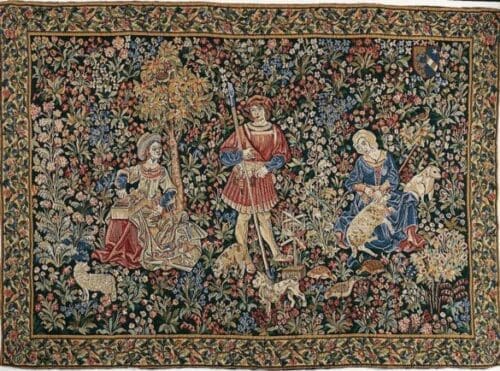 The Making of Wool was adapted from an original tapestry woven in France in the early 17th century. It is presented on exhibit at the Louvre Museum in Paris. Bordered by blossoming vines and set against a flower filled field, a young shepherd standing near a spinning wheel watches as a young woman shears the sheep and another works a loom.
-
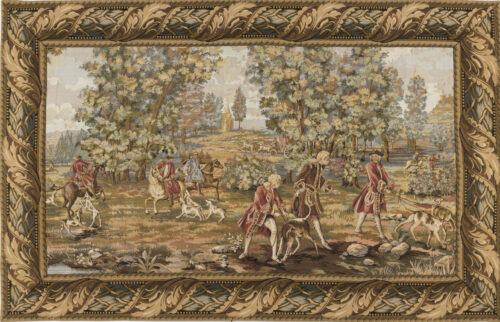 A close-up section taken from a famous painting, depicting several hunt scenes in a royal forest. Here we find the huntsmen on foot along with their hounds.
-
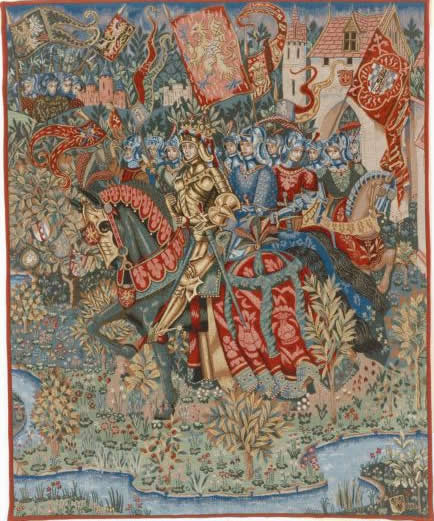
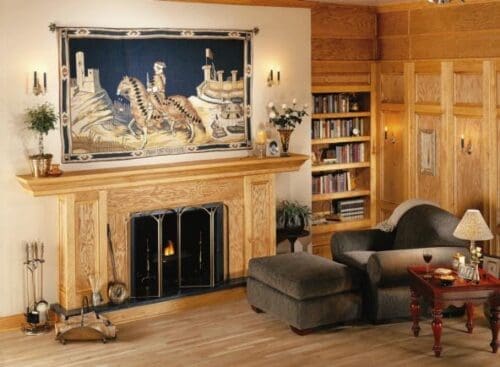 A starless night and a boldly drawn composition yield a very dramatic tapestry scene. Taken from a 14th century fresco in Sienna's town square, the scene features a cavalier proudly trotting on his horse after his victory over the castles of Montemassi and Sassoforte.
-
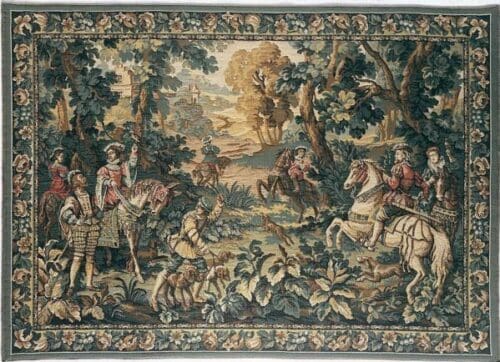 The second tapestry of the set of "Maximilian's Hunting Parties." This action takes place in a lush green forest where subject was of great decorative value in the 16th and 17th centuries. The rider on the left holds a falcon while a kettleman holds the leashes of three dogs. At right, the hunters prepare to begin the chase.
-
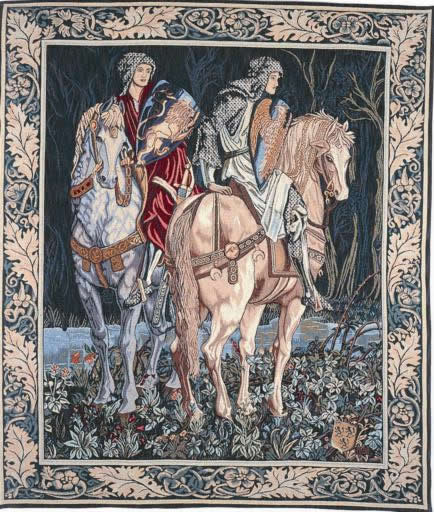 Considered as a major piece of decorative art of the Victorian time, the knights of the round table make their farewells to the ladies of Camelot Also see 41058 and 41060
-
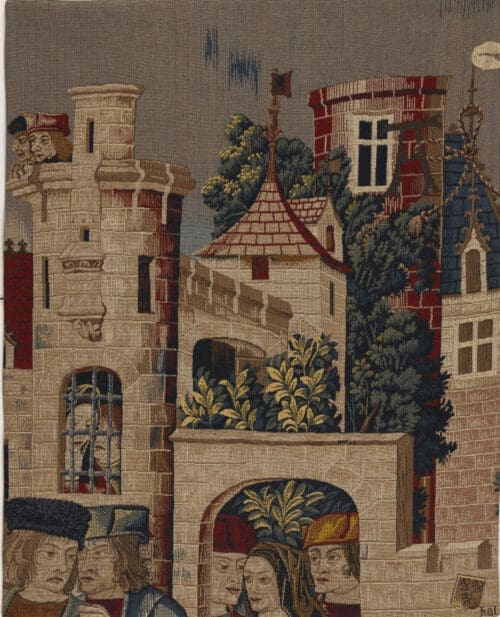 The Castle is a small close-up section of detail from the famous Hunt of the Unicorn tapestry. Outside a feudal 14th century castle, we see people in the dress of the time.
-
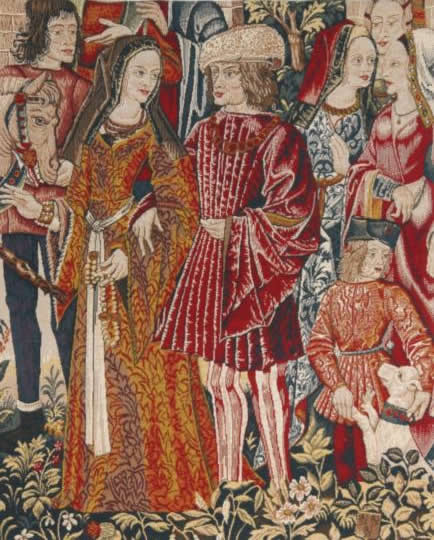 The Castle is a small close-up section of detail from the famous Hunt of the Unicorn tapestry. Outside a feudal 14th century castle, we see people in the dress of the time.
-
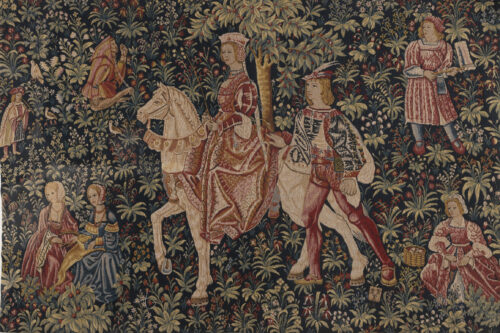 A young noble woman, riding side-saddle, is escorted by a young lord through a flower-filled field, which gives a rustic character to the whole scene. They are surrounded by ladies-in-waiting, a woodcutter and a monkey dressed as a peasant. The Noblewoman tapestries are woven in an extremely fine weave, giving the characters extraordinary detail.
-
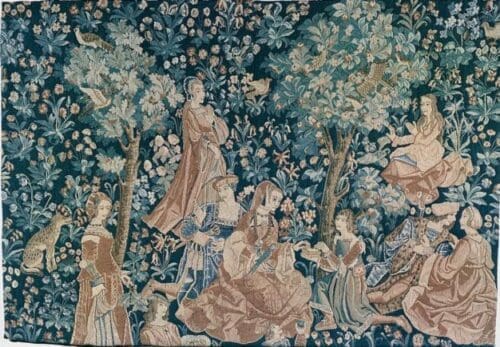 Against a rich background, elegantly dressed are enjoying the afternoon
-
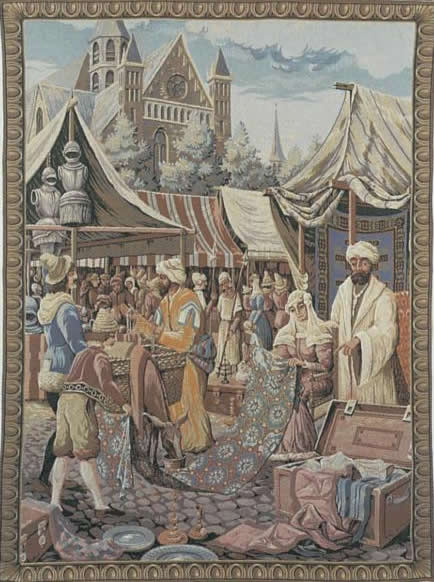 A finely woven tapestry from Belgium depicting a market scene set medieval town of Ghent, a tapestry weaving center. We can see many details of 13th century life - a party of rich citizens bargain with a Levantine silk merchant. Oriental merchants displaying their wares. The historic St.James Church in the background is still there today.
-
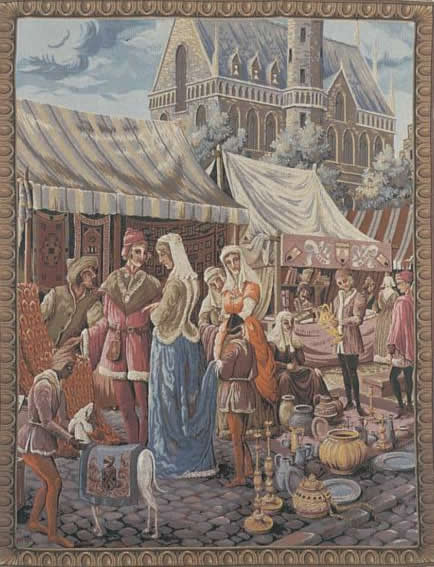 A finely woven tapestry From Belgium depicting a market scene set in the medieval town of Ghent, a tapestry weaving center. We can see many details of 13th century life- a party of rich citizens bargain with a Levantine silk merchant. Go to 46904 to see the entire scene.
-
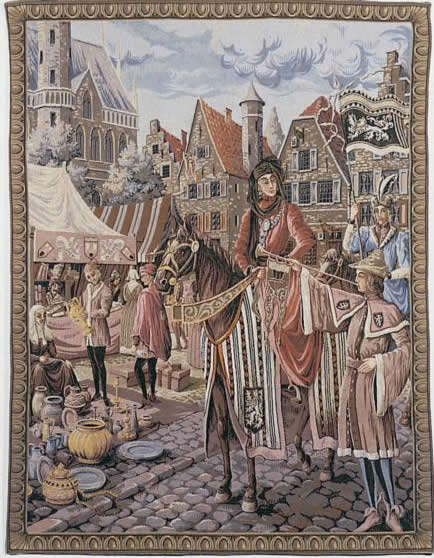 A finely woven tapestry From Belgium depicting a market scene set in the medieval town of Ghent, a tapestry weaving center. We can see many details of 13th century life- a party of rich citizens bargain with a Levantine silk merchant. At the right, a town crier on horseback is escorted by his standard bearer and town trumpeter. To the left (out of view, shown in full scene) are Oriental merchants displaying their wares, The historic St. James Church in the background is still there today.
-
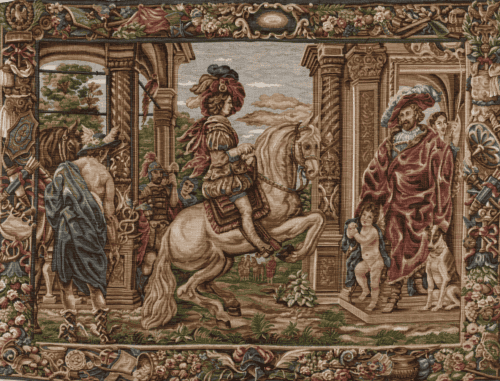 This is a splendid adaptation from the original tapestry, which was woven in Brussels, and is now in the Art History Museum in Vienna. The rider, dressed in finery, is a member of the horseback riding school and shows off his equestrian skills. Note the exquisite border
-
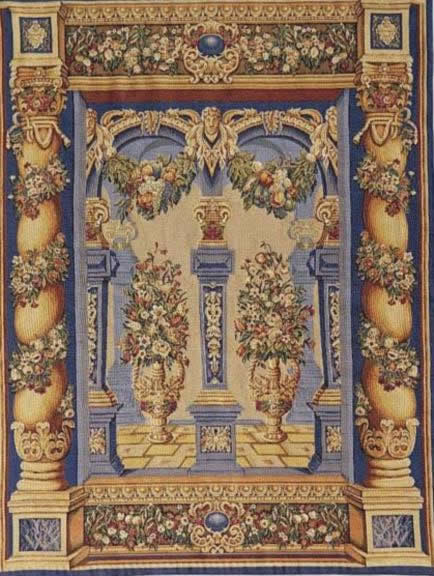 This is an interesting architectural scene. Because of the placement of the columns, this tapestry is perfect for areas with extra high ceilings. Several tapestries were woven in this style in Brussels around 1660.
-
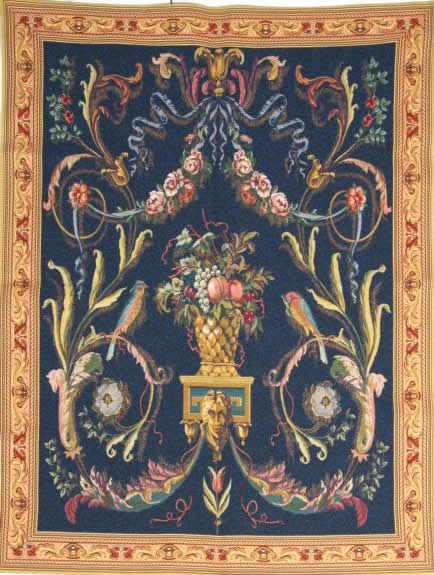 A replica of an original tapestry, dating abut 1510, showing a floral and vegetable setting surrounded by rich flowers and vines.
-
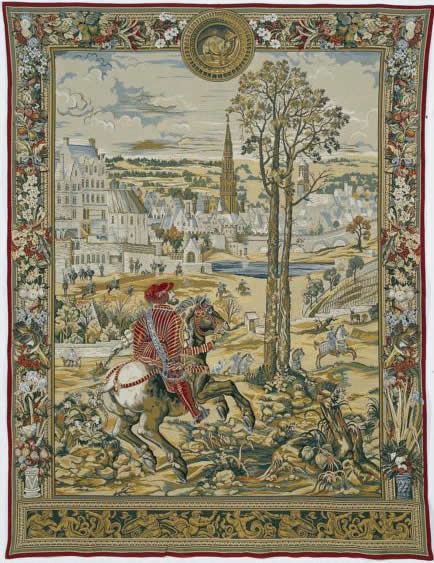 A splendid presentation of the 16th Century original hunt scene featuring Emperor Maximilian astride a rearing horse. The background gives us a panoramic view of Brussels behind the protective stone wall. Woven on Jacquard looms, these exquisite oversize pieces capture the mood of the large original.
-
 It's a beautiful afternoon in the countryside as the people, dressed in their finery, prepare for a horseback ride. Choose from the complete scene or the left panel which includes only the lady and the gentleman.
-
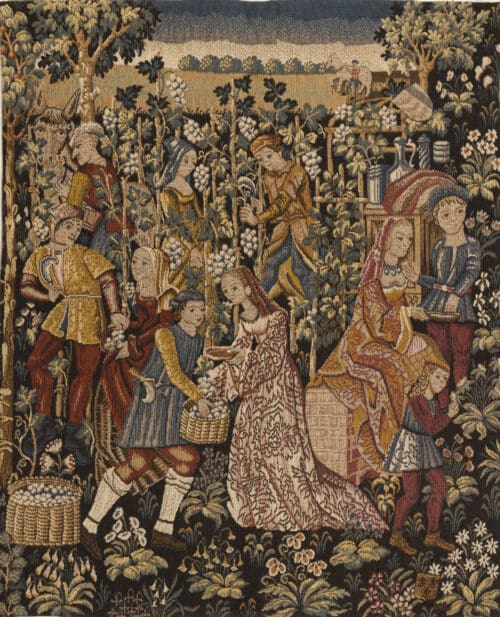 A lord and lady visit the vineyards to taste the first grapes of the season while workers harvest and press the grapes around them. The original tapestry is now in the Cluny Museum in Paris. The Wine Making series is woven in an extremely fine Jacquard weave giving the figures extraordinary detail.
-
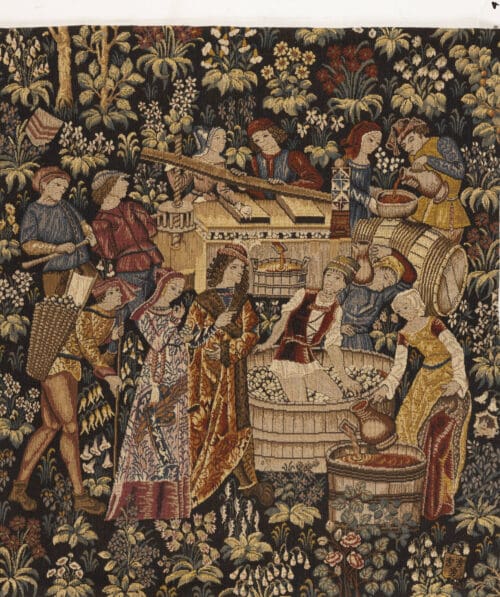 A lord and lady visit the vineyards to taste the first grapes of the season while workers harvest and press the grapes around them. The original tapestry is now in the Cluny Museum in Paris. The Wine Making series is woven in extremely fine Jacquard weave giving the figures extraordinary detail.
-
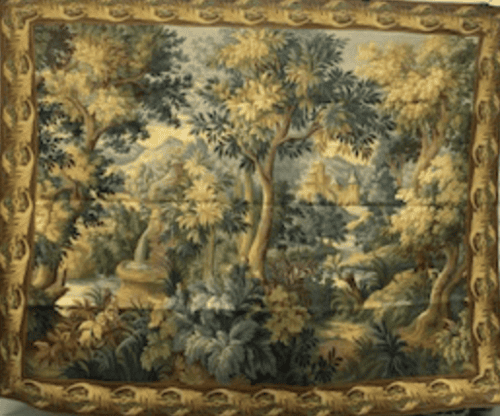 Medieval Forest is unusual for its use of light which gives this vendure scene a larger illusion of space. Our attention goes to the beauty of nature. With warmer and brighter colors, Spring will enter your home.
Customer Service Hours
Monday – Friday: 9 AM – 3 PM
Phone
(312) 622-8130
If we’re unable to answer your call, please leave us a message, and we’ll return your call as soon as possible.
© Copyright 2026 | PIR Vintage Tapestries | Web Design by Sera Group