-
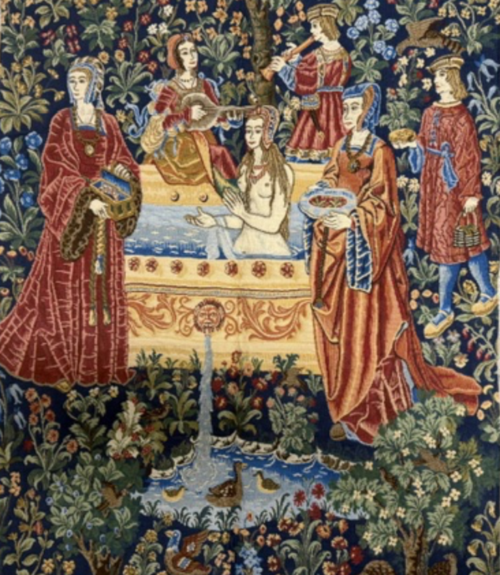 A woman bathing surrounded by attendants. Adapted from a 1500 original.
-
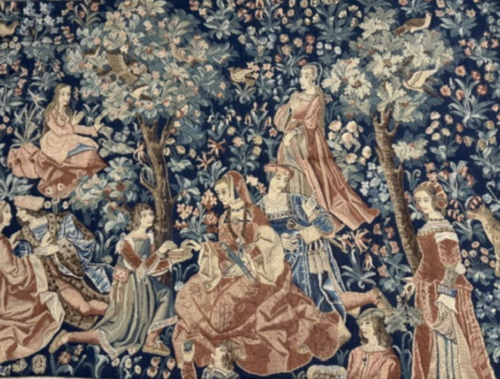 A wonderful reproduction of the 16th Century original in the Cluny Museum, Paris, and is one of a series of six tapestry masterpieces that depict aristocratic life. It shows noblemen and ladies at leisure against a mile fleurs background.
-
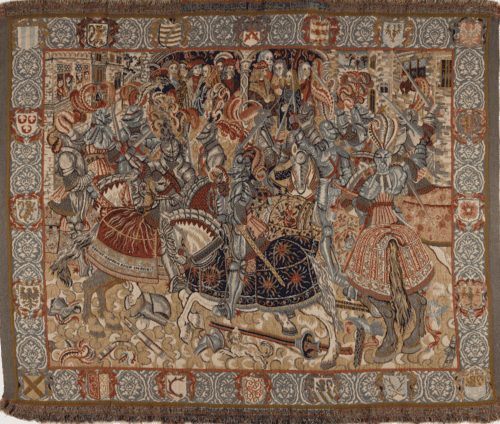 A vibrant scene of the horsemen dueling with a third horseman overseeing the duel.
-
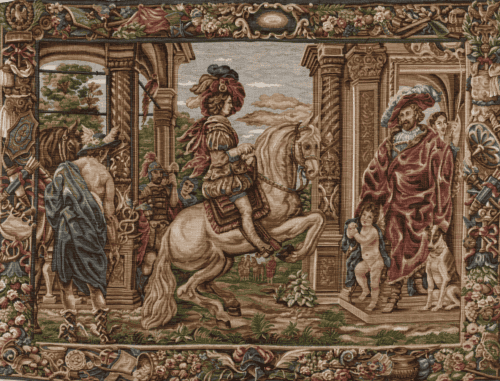 This is a splendid adaptation from the original tapestry, which was woven in Brussels, and is now in the Art History Museum in Vienna. The rider, dressed in finery, is a member of the horseback riding school and shows off his equestrian skills. Note the exquisite border
-
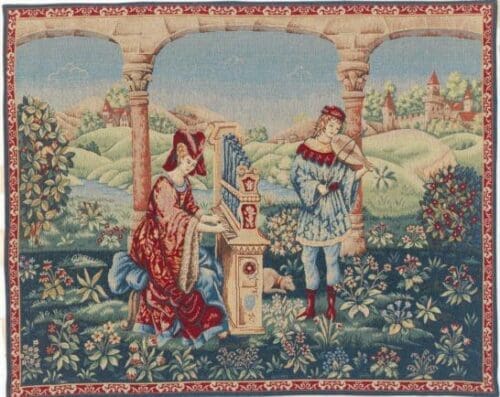
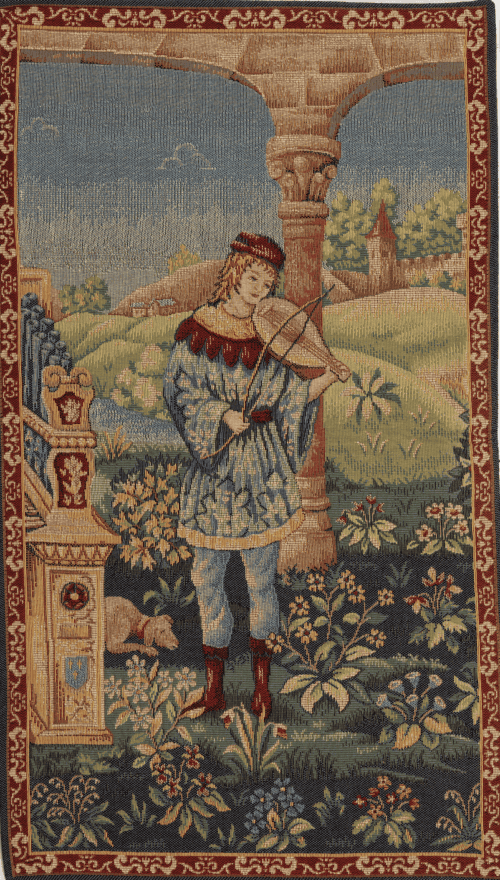 In a 16th century French court, on the shore of the Loire River, young people commonly played music. Here a young troubadour plays the violin. These striking mix of blue and green tones will surely enliven any setting.
-
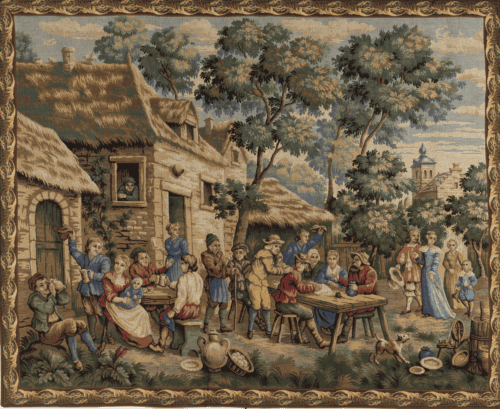 A carefree scene of farmers enjoying the day with their friends.
-
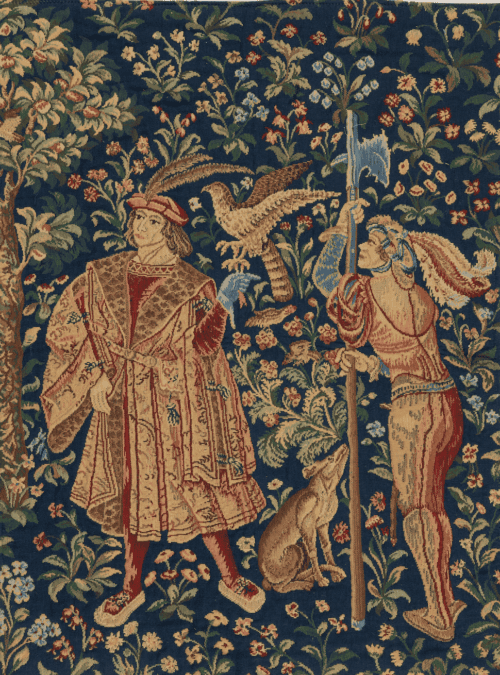 The Falconer is on exhibit in the Cluny Museum in Paris, is all that remains of a much larger 15th Century original that was part of a series of tapestries known as "Scenes of Seignioral (lordy) Life." Its realistically drawn figures have been lifted out of context and silhouetted against a mille fleurs background.
-
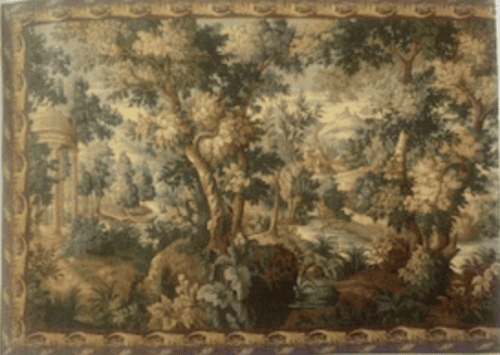 Medieval Forest is unusual for its use of light which gives this vendure scene a larger illusion of space. Our attention goes to the beauty of nature. With warmer and brighter colors, Spring will enter your home.
-
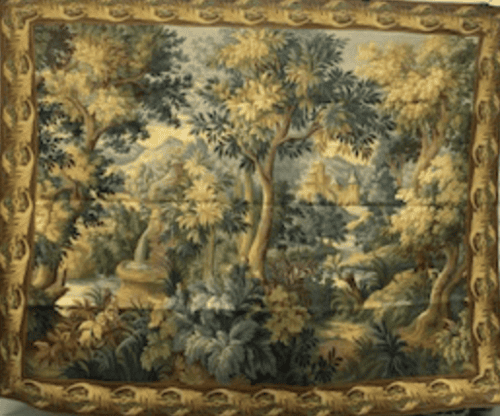 Medieval Forest is unusual for its use of light which gives this vendure scene a larger illusion of space. Our attention goes to the beauty of nature. With warmer and brighter colors, Spring will enter your home.
-
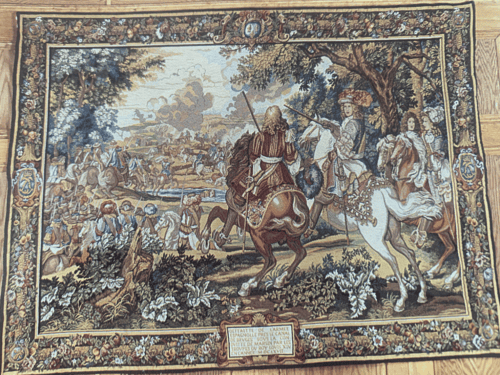 This tapestry represents the victory of King Louis XIV over the Spanish army in Flanders (now Belgium)in 1667. It was designed by the Flemish painter Frans Van der Meulen (1632-1690). The French army is crossing the canal of Bruges, followed by Louis XIV, the Prince de Cande and the Marquis de Crequy. The original tapestry.is in the Palace at Versailles, outside Paris.
-
 It's a beautiful afternoon in the countryside as the people, dressed in their finery, prepare for a horseback ride. Choose from the complete scene or the left panel which includes only the lady and the gentleman.
-
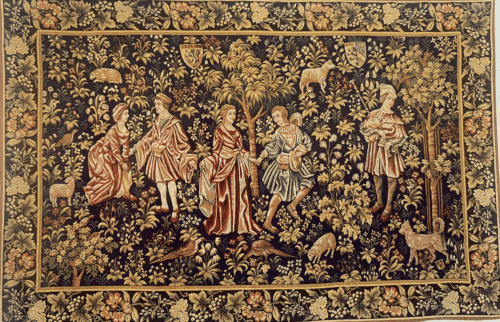 Part of the famous "Noble Pastorale" series of tapestries woven around 1530. The Dance is an exquisite representation of French originality of the period expressing the graceful art of tapestry weaving.
-
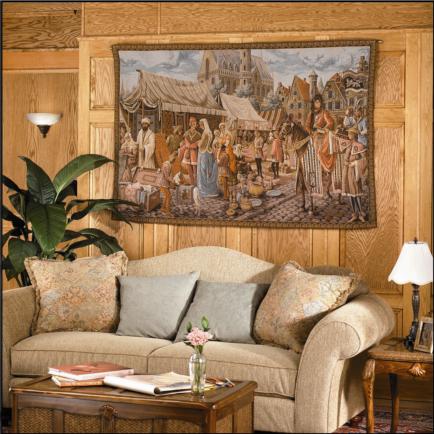 A finely woven tapestry From Belgium depicting a market scene set in the medieval town of Ghent, a tapestry weaving center. We can see many details of 13th century life- a party of rich citizens bargain with a Levantine silk merchant. At the right, a town crier on horseback is escorted by his standard bearer and town trumpeter. To the left (out of view, shown in full scene) are Oriental merchants displaying their wares, The historic St. James Church in the background is still there today.
-
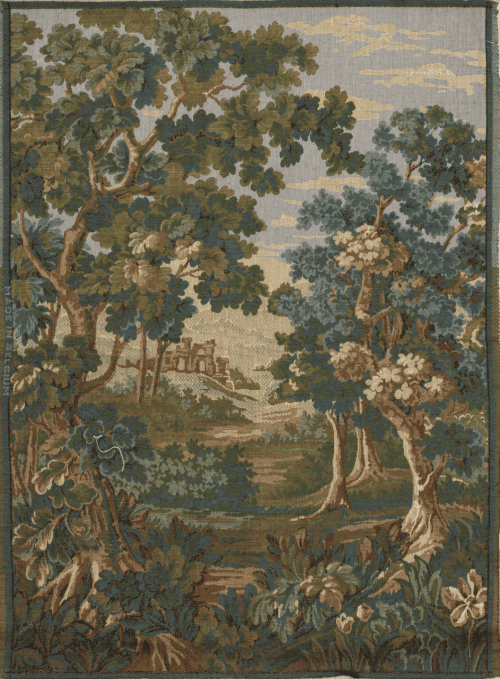 A view from the edge of a 17th century forest. In the distance are remains from ancient construction.
-
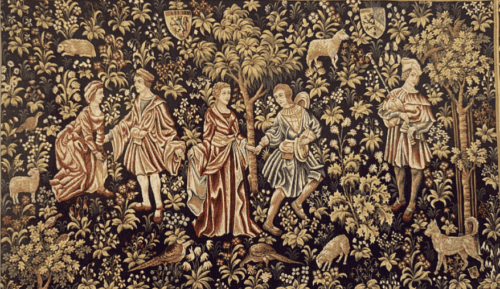 Part of the famous "Noble Pastorale" series of tapestries woven around 1530. The Dance is an exquisite representation of French originality of the period expressing the graceful art of tapestry weaving.
-
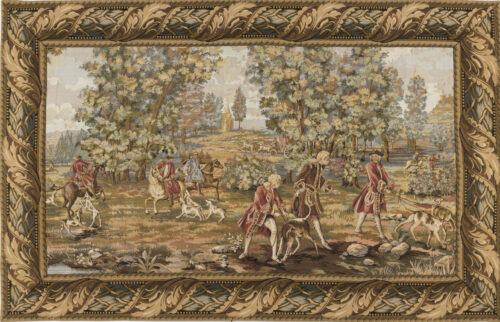 A close-up section taken from a famous painting, depicting several hunt scenes in a royal forest. Here we find the huntsmen on foot along with their hounds.
-
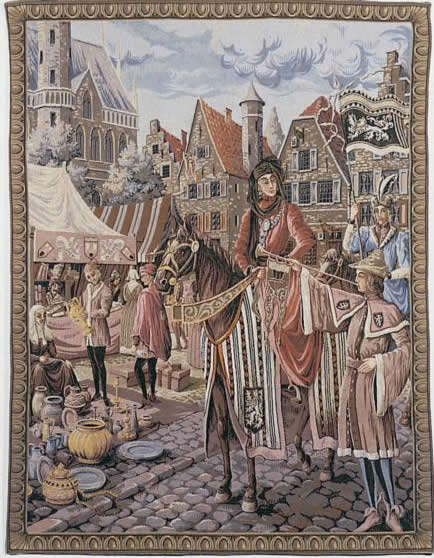 A finely woven tapestry From Belgium depicting a market scene set in the medieval town of Ghent, a tapestry weaving center. We can see many details of 13th century life- a party of rich citizens bargain with a Levantine silk merchant. At the right, a town crier on horseback is escorted by his standard bearer and town trumpeter. To the left (out of view, shown in full scene) are Oriental merchants displaying their wares, The historic St. James Church in the background is still there today.
-
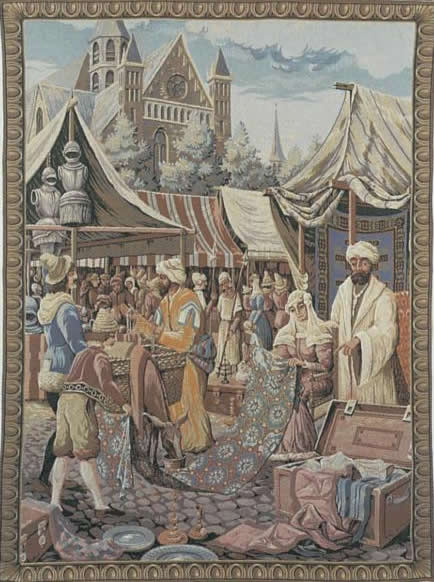 A finely woven tapestry from Belgium depicting a market scene set medieval town of Ghent, a tapestry weaving center. We can see many details of 13th century life - a party of rich citizens bargain with a Levantine silk merchant. Oriental merchants displaying their wares. The historic St.James Church in the background is still there today.
-
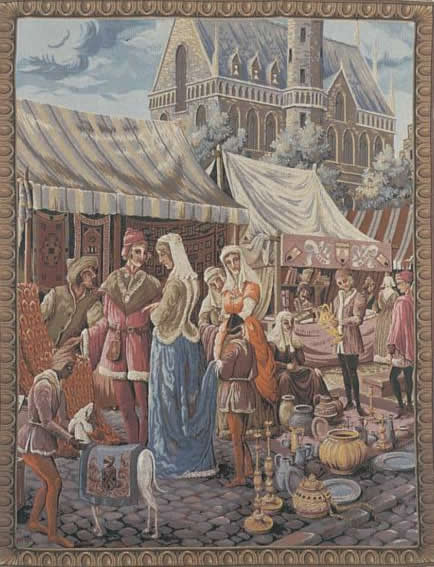 A finely woven tapestry From Belgium depicting a market scene set in the medieval town of Ghent, a tapestry weaving center. We can see many details of 13th century life- a party of rich citizens bargain with a Levantine silk merchant. Go to 46904 to see the entire scene.
-
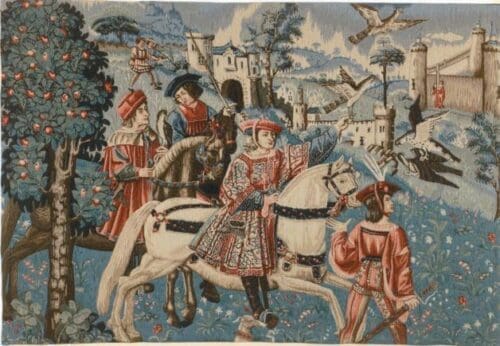 Woven in Brussels at the beginning of the 16th century, the tapestry shows one of the nobilty's favorite passtimes "Hawking". This adaptation is unusual and striking for its various shades of blue. The original is on display in the Cluny Museum in Paris.
-
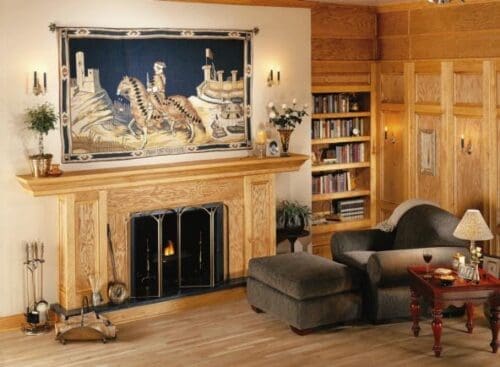 A starless night and a boldly drawn composition yield a very dramatic tapestry scene. Taken from a 14th century fresco in Sienna's town square, the scene features a cavalier proudly trotting on his horse after his victory over the castles of Montemassi and Sassoforte.
-
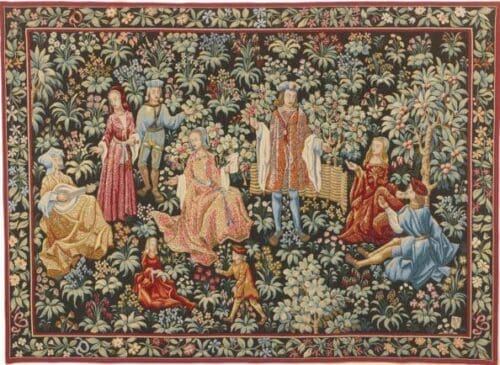 Against a rich "Mille-Fleurs" background, elegantly dressed characters are playing games, reading, or playing music. This graceful and poetic scene, set in the 15th century, reveals "a way" of life" for the nobility. The original is in the Cluny Museum, in Paris.
-
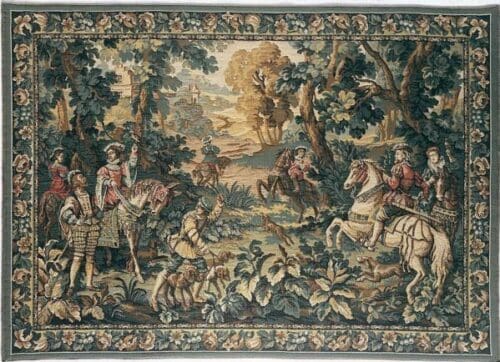 The second tapestry of the set of "Maximilian's Hunting Parties." This action takes place in a lush green forest where subject was of great decorative value in the 16th and 17th centuries. The rider on the left holds a falcon while a kettleman holds the leashes of three dogs. At right, the hunters prepare to begin the chase.

Customer Service Hours
Monday – Friday: 9 AM – 3 PM
Phone
(312) 622-8130
If we’re unable to answer your call, please leave us a message, and we’ll return your call as soon as possible.
© Copyright 2026 | PIR Vintage Tapestries | Web Design by Sera Group