-
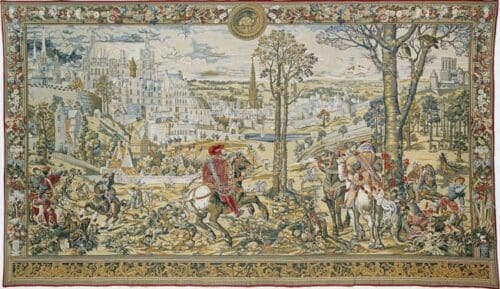 A splendid presentation of the 16th Century original hunt scene featuring Emperor Maximilian astride a rearing horse. The background gives us a panoramic view of Brussels behind the protective stone wall. Woven on Jacquard looms, these exquisite oversize pieces capture the mood of the large original.
-
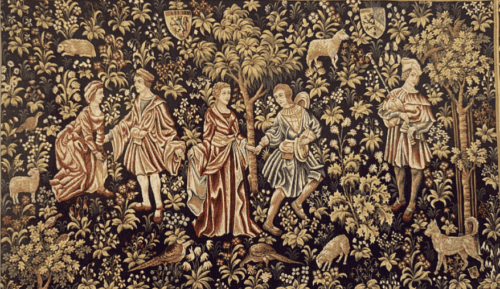 Part of the famous "Noble Pastorale" series of tapestries woven around 1530. The Dance is an exquisite representation of French originality of the period expressing the graceful art of tapestry weaving.
-
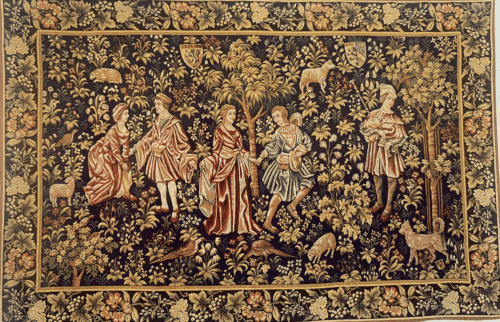 Part of the famous "Noble Pastorale" series of tapestries woven around 1530. The Dance is an exquisite representation of French originality of the period expressing the graceful art of tapestry weaving.
-
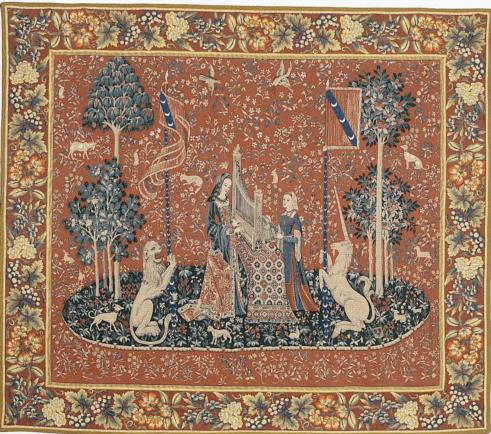 Organ, the organ and it's music represent the sense of "hearing." The lion and the unicorn, emblems of strength and purity, are both raising banners to represent their unity. Both tapestries here are superb adaptations from the originals now in the Cluny Museum in Paris. The original series of six tapestries were presented to Claude de Viste by Jean de Chabanne as an engagement present in 1512.
-
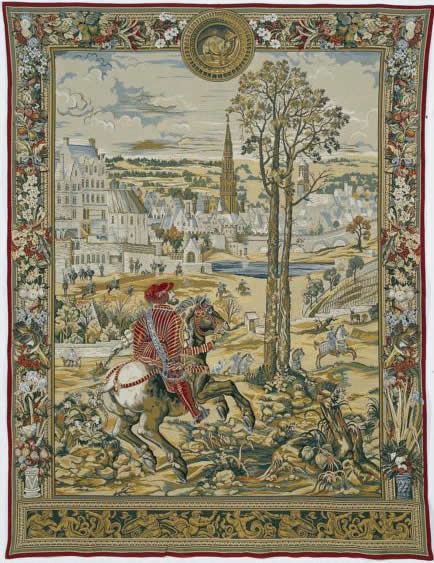 A splendid presentation of the 16th Century original hunt scene featuring Emperor Maximilian astride a rearing horse. The background gives us a panoramic view of Brussels behind the protective stone wall. Woven on Jacquard looms, these exquisite oversize pieces capture the mood of the large original.
-
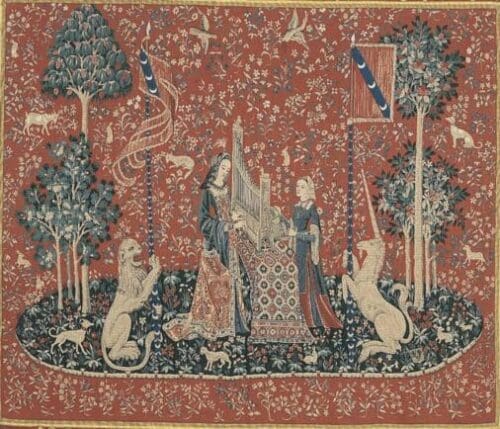 To My Only Desire presents a richly clad lady standing in front of a tent crowned by a banner on which is inscribed "a mon seul desir" (to my only desire). In Lady with the Organ, the organ and its music represent the sense of "hearing". The lion and the unicorn, emblems of strength and purity are both raising banners to represent their unity. Both tapestries here are superb adaptations from the originals now in the Cluny Museum in Paris. The original series of six tapestries were presented to Claude de Viste by Jean de Chabanne as an engagement present in 1512. the first five tapestries are devoted to the senses, while the sixth, "To My Only Desire" probably represents love.
-
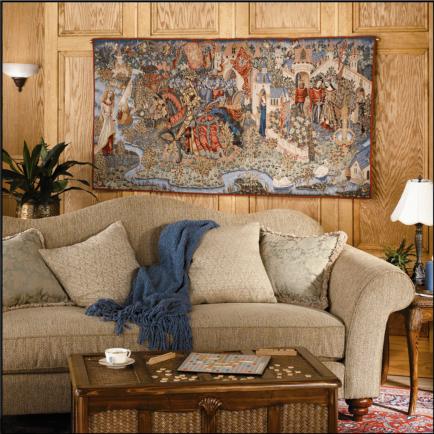
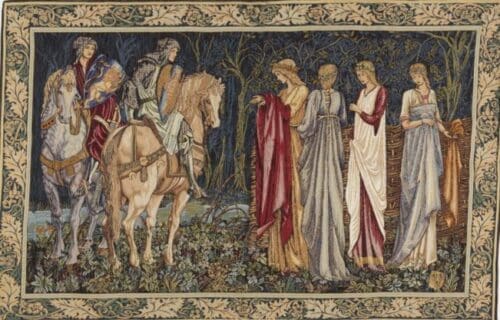 Considered as a major piece of decorative art of the Victorian time, the knights of the round table make their farewells to the ladies of Camelot. Also see 41059 and 41060
-
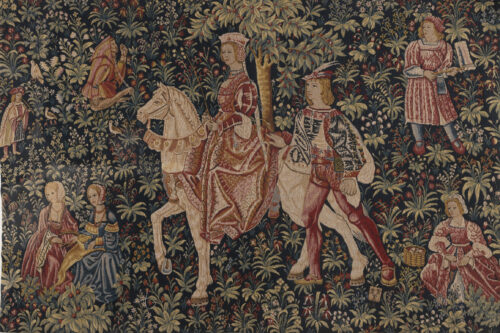 A young noble woman, riding side-saddle, is escorted by a young lord through a flower-filled field, which gives a rustic character to the whole scene. They are surrounded by ladies-in-waiting, a woodcutter and a monkey dressed as a peasant. The Noblewoman tapestries are woven in an extremely fine weave, giving the characters extraordinary detail.
-
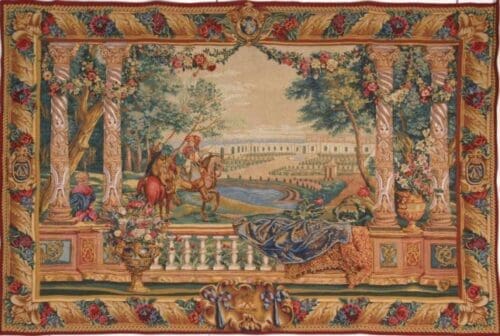 Near their lovely home at Versailles, two ladies, beautifully dressed, are enjoying their horses.
Customer Service Hours
Monday – Friday: 9 AM – 3 PM
Phone
(312) 622-8130
If we’re unable to answer your call, please leave us a message, and we’ll return your call as soon as possible.
© Copyright 2026 | PIR Vintage Tapestries | Web Design by Sera Group