-
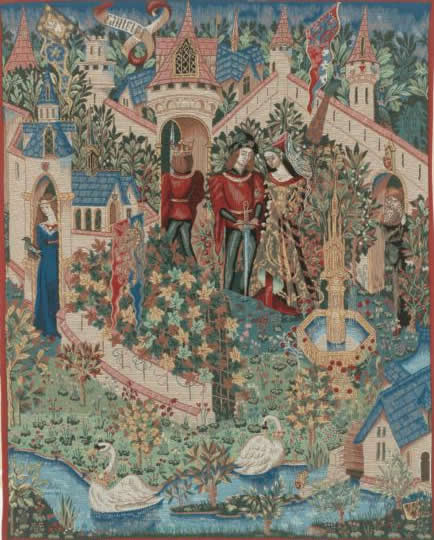 A lovely scene, adapted from a rare painting, with a young couple at their castle and servants in the background
-
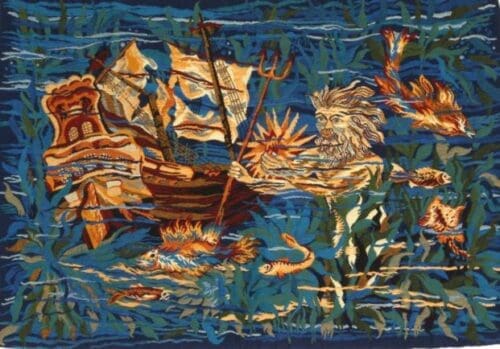 An artist of the sea rendering this view of a lost ship at sea.
-
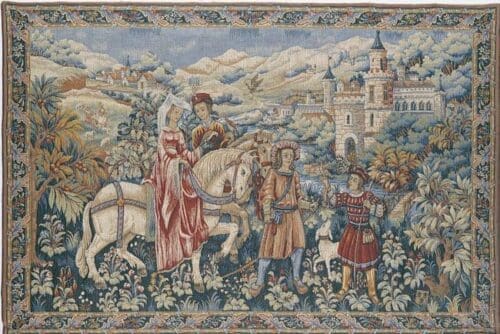 The month of May, traditionally a month of love and romance is illustrated here as Prince Jean de France, Duke of Berry, enjoys a relaxed Spring ride in the company of a sweet lady. The soft pastel colors of this tapestry stand in contrast to the traditional dark background found in most tapestries of the period.
-
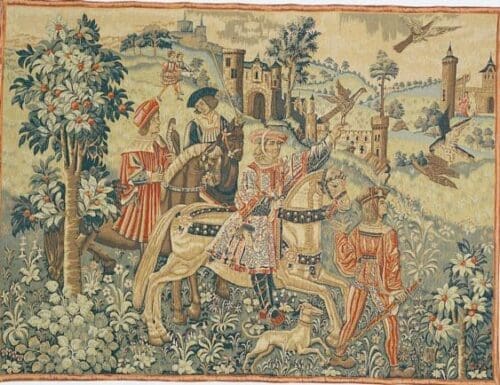 Three mounted noblemen are departing from the castle on a falconing expedition. The original, now in the Cluny Museum in Paris, was woven in the Loire Valley in the 16th century.
-
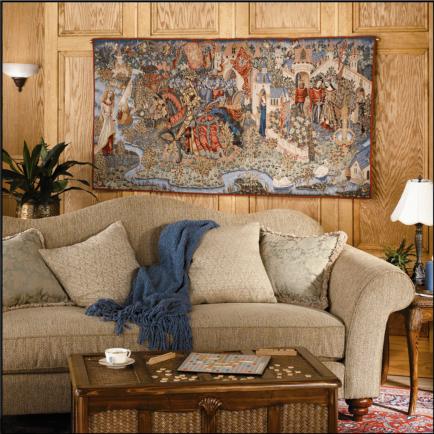
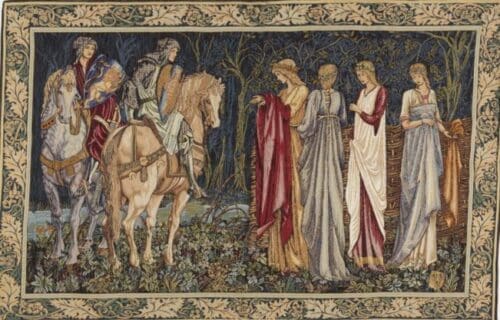 Considered as a major piece of decorative art of the Victorian time, the knights of the round table make their farewells to the ladies of Camelot. Also see 41059 and 41060
-
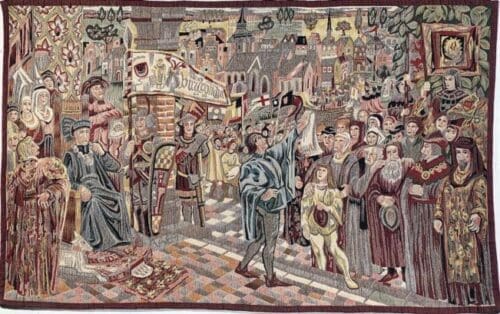
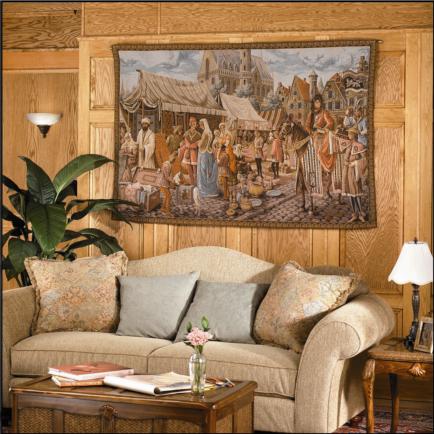 A finely woven tapestry From Belgium depicting a market scene set in the medieval town of Ghent, a tapestry weaving center. We can see many details of 13th century life- a party of rich citizens bargain with a Levantine silk merchant. At the right, a town crier on horseback is escorted by his standard bearer and town trumpeter. To the left (out of view, shown in full scene) are Oriental merchants displaying their wares, The historic St. James Church in the background is still there today.
-
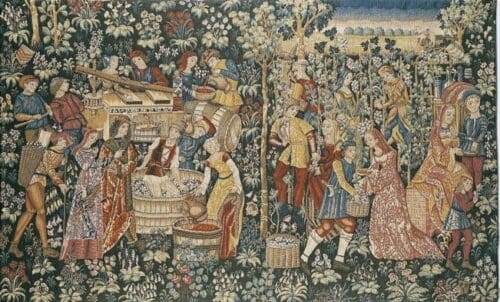
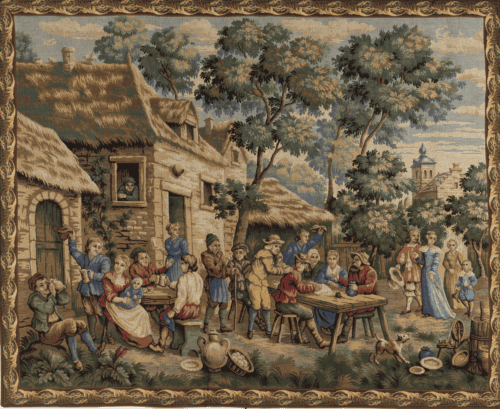 A carefree scene of farmers enjoying the day with their friends.
-
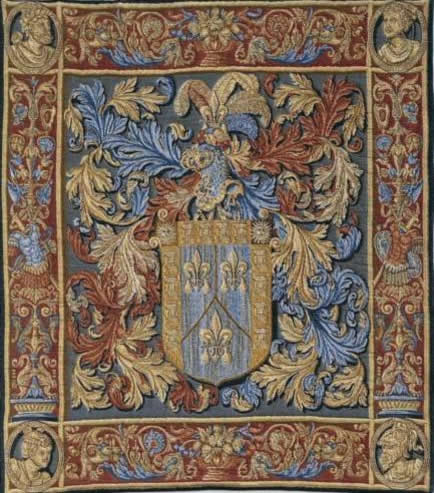 A pleasing sense of balance is displayed on this coat of arms tapestry. Woven in the 16th century by Aernont Van Loo for the De Nagera family in Flanders, the original is now in the Museum of Bruges in Belgium.
-
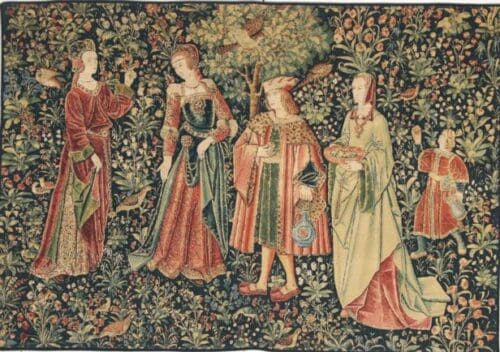 Against a rich background the elegantly dressed characters are attending to a matter.
-
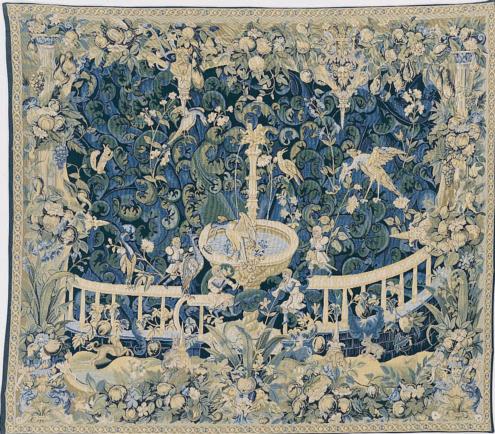 From a 16th Century original.Typical of the period is popularity of formal gardens. Here the lovely fountain is surrounded by foliage, birds and small animals.
-
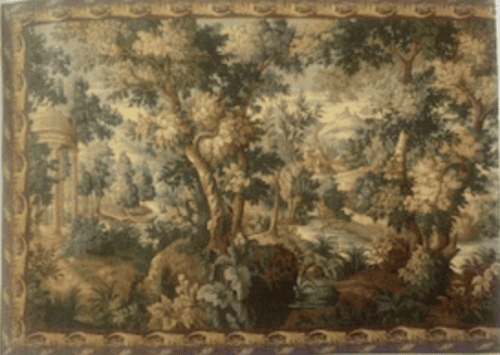 Medieval Forest is unusual for its use of light which gives this vendure scene a larger illusion of space. Our attention goes to the beauty of nature. With warmer and brighter colors, Spring will enter your home.
-
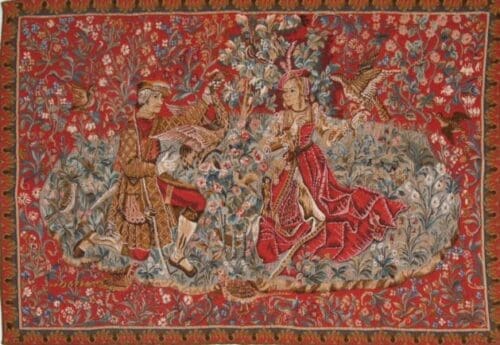 A nobel lady with her servant are holding a falcon that they recently captured. The finely detailed weave captures the mood at the time.
-
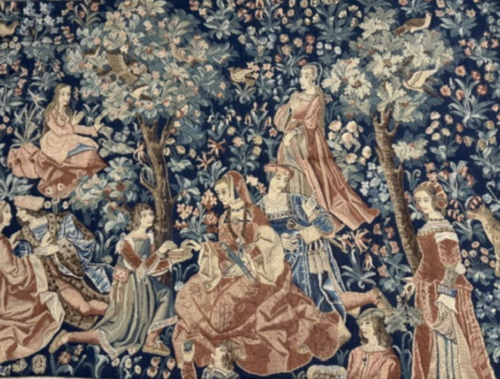 A wonderful reproduction of the 16th Century original in the Cluny Museum, Paris, and is one of a series of six tapestry masterpieces that depict aristocratic life. It shows noblemen and ladies at leisure against a mile fleurs background.
-
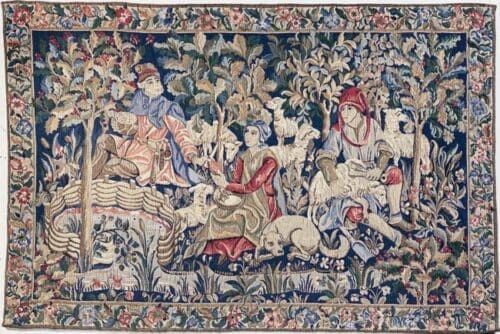 A lush floral border frames this pastoral sheep shearing scene. Sheep shearing was the main task on country estates during the month of June in the 15th century. The original is in the Royal Museum of Art and History in Brussels.
-
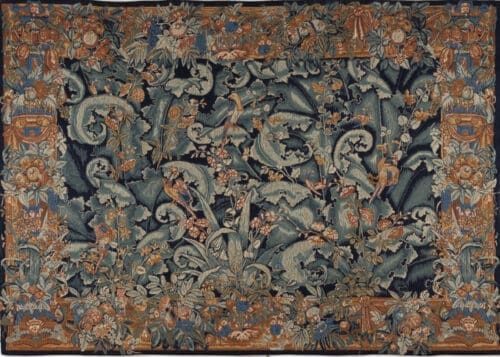 A wonderful vine and cabbage leaf design adapted from the William Morris original woven in 1879. Morris loved the medieval style and included many of these elements in his design- the birds and border are especially noteworthy here.
-
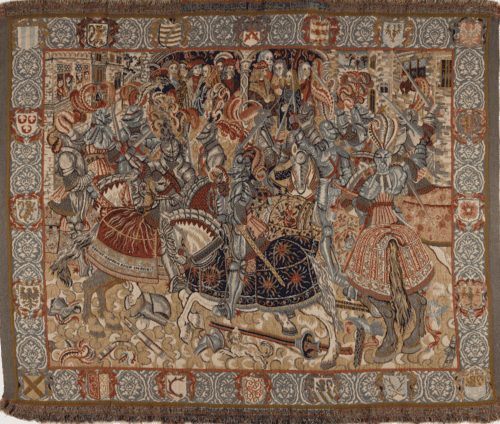 A vibrant scene of the horsemen dueling with a third horseman overseeing the duel.
-
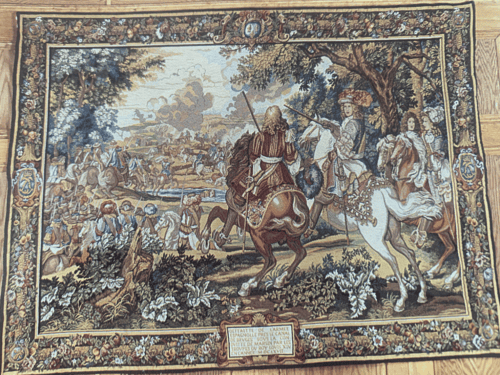 This tapestry represents the victory of King Louis XIV over the Spanish army in Flanders (now Belgium)in 1667. It was designed by the Flemish painter Frans Van der Meulen (1632-1690). The French army is crossing the canal of Bruges, followed by Louis XIV, the Prince de Cande and the Marquis de Crequy. The original tapestry.is in the Palace at Versailles, outside Paris.
-
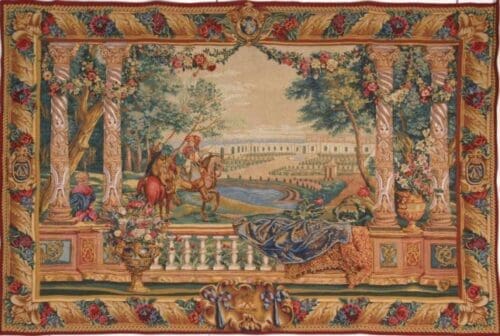 Near their lovely home at Versailles, two ladies, beautifully dressed, are enjoying their horses.
-
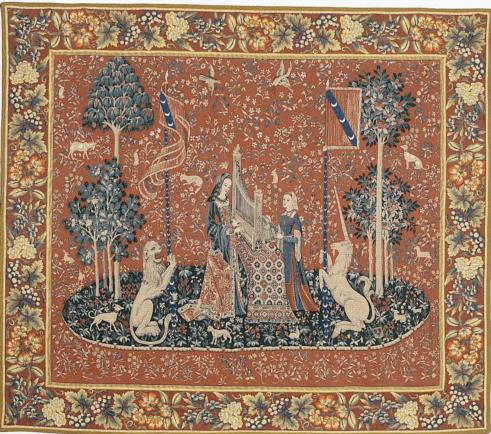 Organ, the organ and it's music represent the sense of "hearing." The lion and the unicorn, emblems of strength and purity, are both raising banners to represent their unity. Both tapestries here are superb adaptations from the originals now in the Cluny Museum in Paris. The original series of six tapestries were presented to Claude de Viste by Jean de Chabanne as an engagement present in 1512.
-
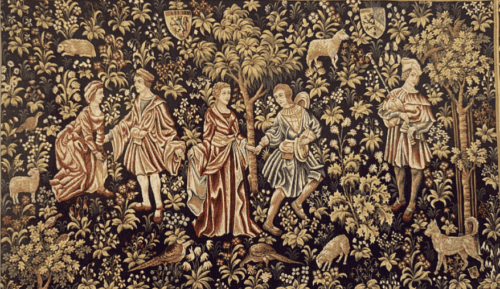 Part of the famous "Noble Pastorale" series of tapestries woven around 1530. The Dance is an exquisite representation of French originality of the period expressing the graceful art of tapestry weaving.
-
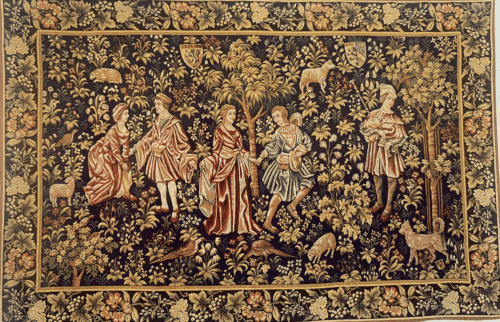 Part of the famous "Noble Pastorale" series of tapestries woven around 1530. The Dance is an exquisite representation of French originality of the period expressing the graceful art of tapestry weaving.
-
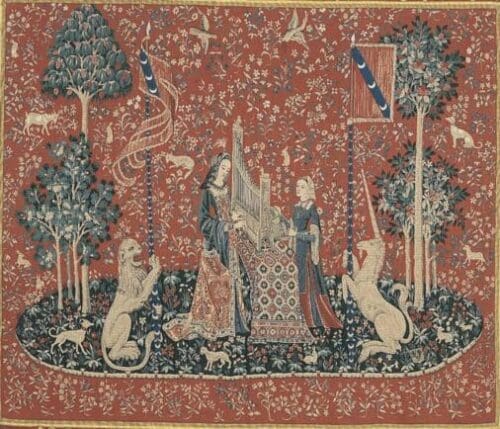 To My Only Desire presents a richly clad lady standing in front of a tent crowned by a banner on which is inscribed "a mon seul desir" (to my only desire). In Lady with the Organ, the organ and its music represent the sense of "hearing". The lion and the unicorn, emblems of strength and purity are both raising banners to represent their unity. Both tapestries here are superb adaptations from the originals now in the Cluny Museum in Paris. The original series of six tapestries were presented to Claude de Viste by Jean de Chabanne as an engagement present in 1512. the first five tapestries are devoted to the senses, while the sixth, "To My Only Desire" probably represents love.
-
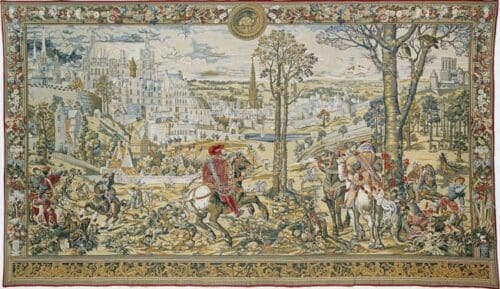 A splendid presentation of the 16th Century original hunt scene featuring Emperor Maximilian astride a rearing horse. The background gives us a panoramic view of Brussels behind the protective stone wall. Woven on Jacquard looms, these exquisite oversize pieces capture the mood of the large original.
Customer Service Hours
Monday – Friday: 9 AM – 3 PM
Phone
(312) 622-8130
If we’re unable to answer your call, please leave us a message, and we’ll return your call as soon as possible.
© Copyright 2026 | PIR Vintage Tapestries | Web Design by Sera Group