-
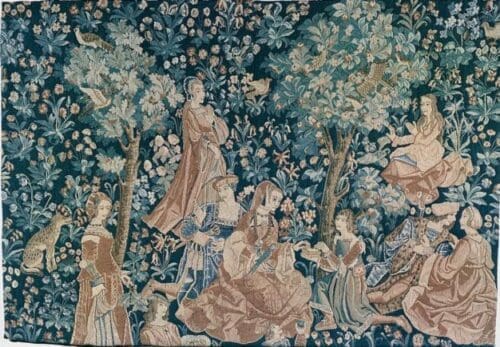 Against a rich background, elegantly dressed are enjoying the afternoon
-
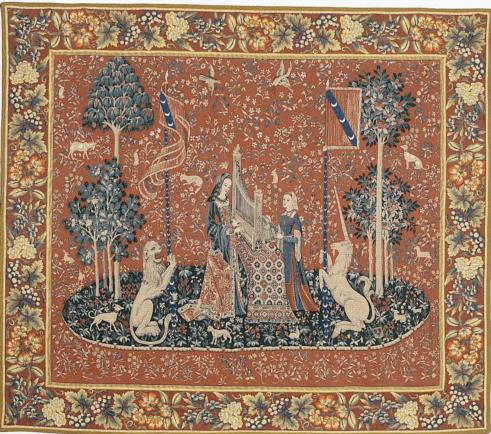 Organ, the organ and it's music represent the sense of "hearing." The lion and the unicorn, emblems of strength and purity, are both raising banners to represent their unity. Both tapestries here are superb adaptations from the originals now in the Cluny Museum in Paris. The original series of six tapestries were presented to Claude de Viste by Jean de Chabanne as an engagement present in 1512.
-
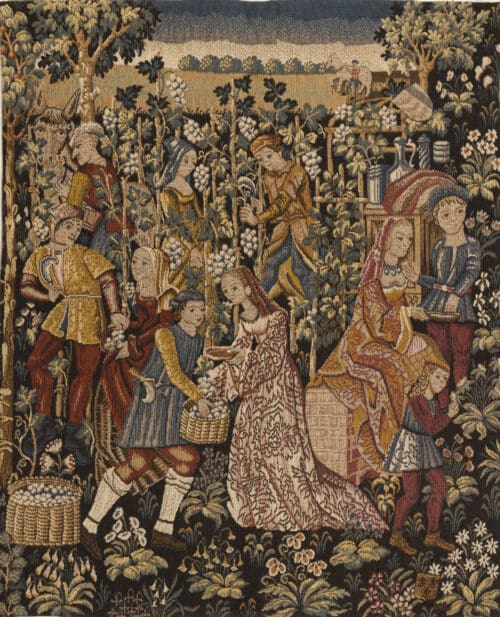 A lord and lady visit the vineyards to taste the first grapes of the season while workers harvest and press the grapes around them. The original tapestry is now in the Cluny Museum in Paris. The Wine Making series is woven in an extremely fine Jacquard weave giving the figures extraordinary detail.
-
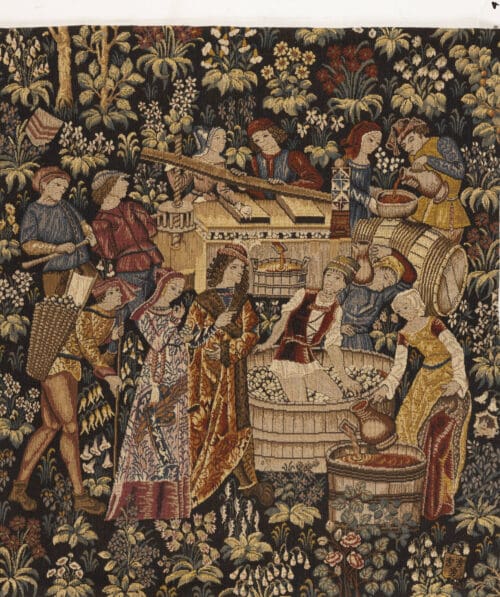 A lord and lady visit the vineyards to taste the first grapes of the season while workers harvest and press the grapes around them. The original tapestry is now in the Cluny Museum in Paris. The Wine Making series is woven in extremely fine Jacquard weave giving the figures extraordinary detail.
-
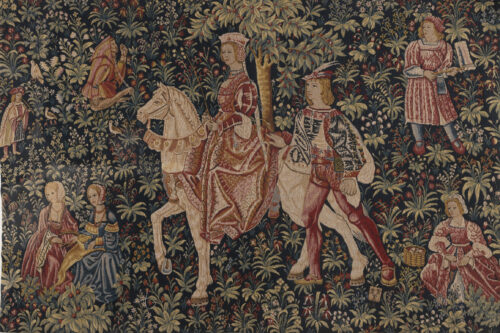 A young noble woman, riding side-saddle, is escorted by a young lord through a flower-filled field, which gives a rustic character to the whole scene. They are surrounded by ladies-in-waiting, a woodcutter and a monkey dressed as a peasant. The Noblewoman tapestries are woven in an extremely fine weave, giving the characters extraordinary detail.
-
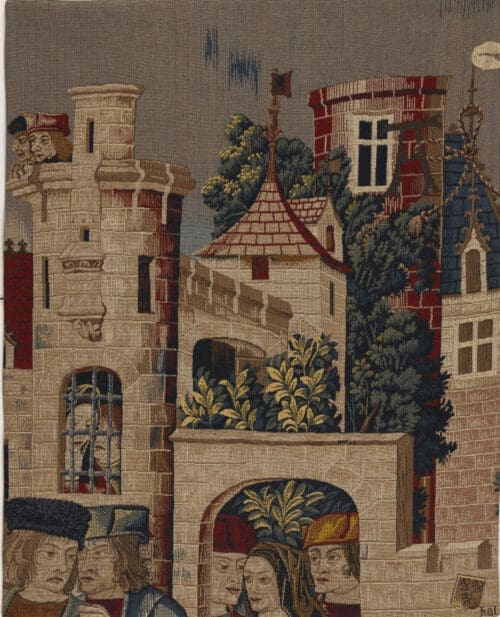 The Castle is a small close-up section of detail from the famous Hunt of the Unicorn tapestry. Outside a feudal 14th century castle, we see people in the dress of the time.
-
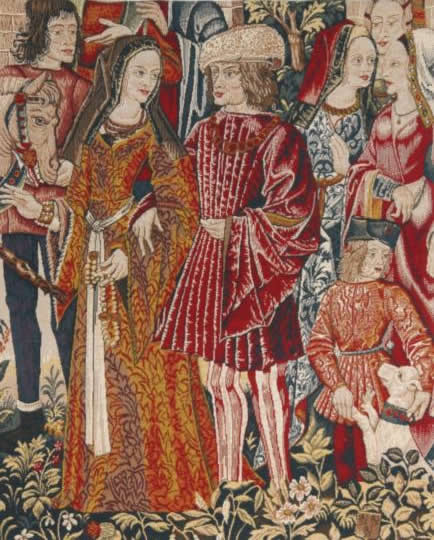 The Castle is a small close-up section of detail from the famous Hunt of the Unicorn tapestry. Outside a feudal 14th century castle, we see people in the dress of the time.
-
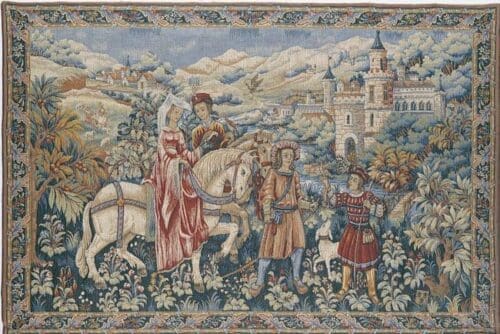 The month of May, traditionally a month of love and romance is illustrated here as Prince Jean de France, Duke of Berry, enjoys a relaxed Spring ride in the company of a sweet lady. The soft pastel colors of this tapestry stand in contrast to the traditional dark background found in most tapestries of the period.
-
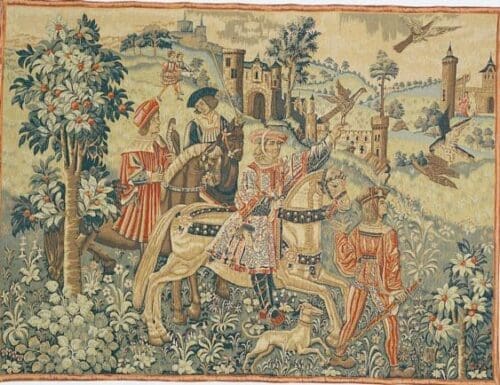 Three mounted noblemen are departing from the castle on a falconing expedition. The original, now in the Cluny Museum in Paris, was woven in the Loire Valley in the 16th century.
-
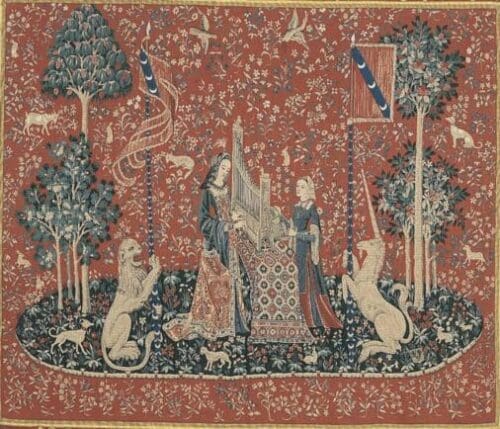 To My Only Desire presents a richly clad lady standing in front of a tent crowned by a banner on which is inscribed "a mon seul desir" (to my only desire). In Lady with the Organ, the organ and its music represent the sense of "hearing". The lion and the unicorn, emblems of strength and purity are both raising banners to represent their unity. Both tapestries here are superb adaptations from the originals now in the Cluny Museum in Paris. The original series of six tapestries were presented to Claude de Viste by Jean de Chabanne as an engagement present in 1512. the first five tapestries are devoted to the senses, while the sixth, "To My Only Desire" probably represents love.
-
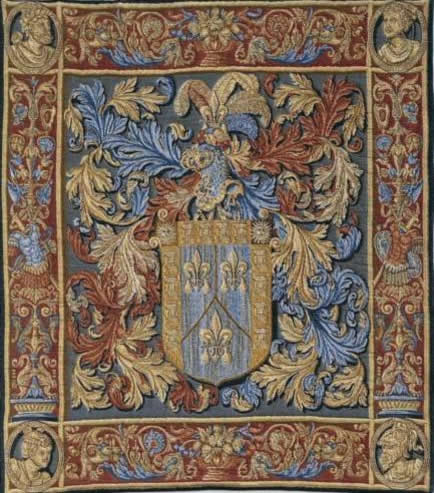 A pleasing sense of balance is displayed on this coat of arms tapestry. Woven in the 16th century by Aernont Van Loo for the De Nagera family in Flanders, the original is now in the Museum of Bruges in Belgium.
Customer Service Hours
Monday – Friday: 9 AM – 3 PM
Phone
(312) 622-8130
If we’re unable to answer your call, please leave us a message, and we’ll return your call as soon as possible.
© Copyright 2026 | PIR Vintage Tapestries | Web Design by Sera Group